Zoho WorkDrive Earns a Spot in the 2026 Gartner® Magic Quadrant™ for Document Management
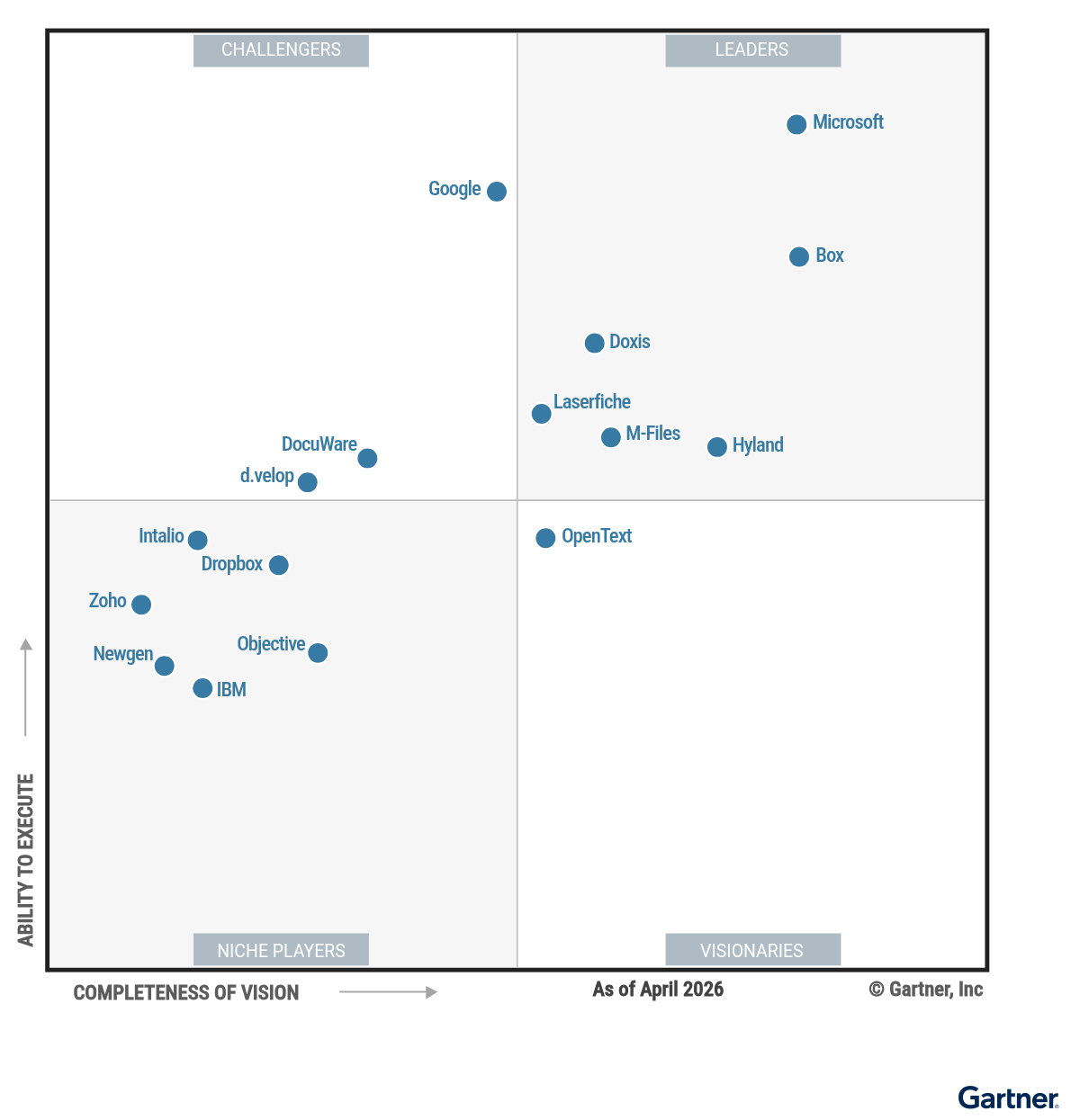
Zoho has been named a Niche Player in the Gartner® Magic Quadrant™ for Document Management, 2026 — the first time the company has appeared in this particular evaluation. For anyone tracking where Zoho WorkDrive fits in the broader enterprise content landscape, this is worth paying attention to.
What the Recognition Actually Signals
A Niche Player placement in a Gartner Magic Quadrant isn’t a consolation prize — it means Gartner found the product credible enough to evaluate against a defined set of enterprise criteria. For Zoho Workplace users who’ve been using WorkDrive primarily as a team file-sharing layer, this recognition reflects something that’s been happening inside the product for a while: WorkDrive has been quietly building out capabilities well beyond storage. Governance controls, metadata organization, data loss prevention, AI-assisted content workflows, and enterprise search have all been added or expanded in recent releases. The Gartner evaluation appears to have taken note of that trajectory.
What Zoho is transparent about in the announcement is equally important: the recognition also surfaces areas where WorkDrive still has ground to cover — broader document management depth, market visibility, and industry-specific packaged solutions. That kind of honest framing is actually useful if you’re evaluating Zoho WorkDrive for document management in your organization. You’re not getting a finished enterprise content management platform on the level of decades-old incumbents. You’re getting a platform that’s mid-transition, with a clear direction and a development pace that’s been consistent. Read the full announcement on Zoho’s blog for the full context, including Zoho’s own framing of where the product is headed.
Why the “Intelligent Content Infrastructure” Framing Matters
Gartner’s report itself highlights something that resonates with what we see in client environments: somewhere between 70% and 90% of enterprise data is unstructured. That’s the actual problem most organizations are sitting on. Files scattered across email threads, personal drives, and disconnected storage — none of it searchable, governed, or usable by any AI tool you might want to run on top of it. The shift Zoho is describing — from “where files are stored” to “how content operates across workflows” — is the right framing for what document management actually needs to solve in 2026.
We’ve seen teams struggle with this repeatedly. They adopt a collaboration tool, fill it with thousands of documents over two or three years, and then realize nothing is organized, nothing is governed, and no one can find anything reliably. Zoho WorkDrive’s document management capabilities — particularly around team folders, permission structures, and the evolving content hub features — give organizations a path to address that before it becomes a compliance or operational problem. The integration surface with the rest of the Zoho ecosystem, including Zoho CRM and Zoho Flow, makes WorkDrive more useful than a standalone document platform because content doesn’t live in isolation from the workflows that generate it.
Who Should Be Paying Attention to This
If your organization is already on Zoho One and using WorkDrive as basic cloud storage, this is a good moment to reassess what you’re actually getting access to. The governance and AI-assisted workflow features that earned Zoho this Gartner placement are available to you — they may just not be configured. If you’re evaluating document management platforms and Zoho wasn’t on your shortlist because it didn’t appear in analyst reports, that calculus has now changed. It’s not the most mature option in the market, but for organizations already invested in the Zoho ecosystem, the integration advantages and the development roadmap make it worth a serious look.